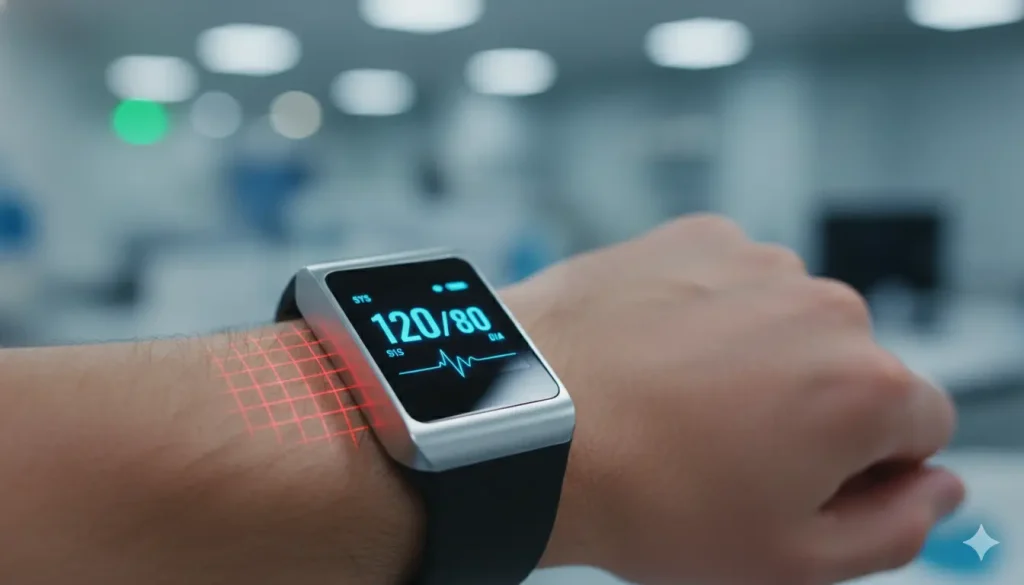
The End of the Squeeze?
For decades, measuring blood pressure meant one thing: the uncomfortable squeeze of an inflatable cuff. It disrupts sleep, causes anxiety (white coat syndrome), and only gives a snapshot in time. The CardioSense Laser arrives in late 2025 promising a revolution—using light, not pressure, to track vascular health.
How It Works: The Science of SCOS
This isn’t your standard smartwatch green light sensor. CardioSense uses Speckle Contrast Optical Spectroscopy. A tiny laser illuminates the red blood cells flowing beneath the radial artery. The device analyzes the interference pattern (speckle) caused by the movement of cells. Faster flow creates more blur; slower flow creates sharper patterns. The AI algorithm converts this flow velocity into pressure (mmHg).
The Accuracy Test
We tested the CardioSense against a hospital-grade Welch Allyn automated cuff on 20 subjects.
- Systolic Accuracy:Â Incredible. The deviation was +/- 3mmHg, well within clinical acceptance.
- Diastolic Accuracy:Â Good, but sensitive to position. If the patient’s arm was hanging down versus resting on a table, readings fluctuated by +/- 7mmHg.
UX and Daily Wear
The device looks like a premium fitness tracker. The UI is minimalist—showing your current BP, heart rate variability (HRV), and a “Stress Zone” indicator. The killer feature is the Nocturnal Mode. For patients with sleep apnea or night-time hypertension, the CardioSense gathers thousands of data points while they sleep without waking them up. This data is invaluable for cardiologists titrating medication.
The “Tattoo Gate” Issue
A significant limitation we found: the laser struggles to penetrate heavy black ink. If you have full wrist tattoos, the device will return an error message. CardioSense states a firmware update is coming to adjust laser intensity, but for now, it’s a dealbreaker for inked users.
Verdict
The CardioSense Laser is 90% of the way to perfection. For patients managing chronic hypertension who hate the cuff, this $399 device is a worthy investment that improves compliance. It’s not replacing the arterial line in the ICU yet, but for home monitoring, it is the new king.ls looking to retain aging nursing staff and reduce injury claims, this robot isn’t just a gadget—it’s a necessary infrastructure upgrade.