The Heavy Lifting Crisis
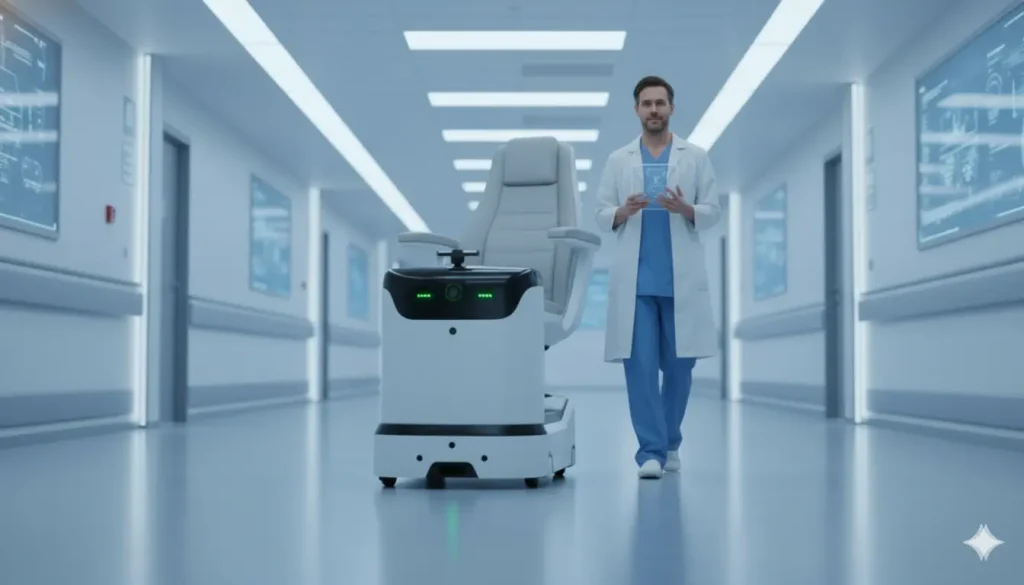
Musculoskeletal injuries are the silent epidemic in nursing. In 2025, with staffing shortages still critical, the physical toll of moving patients is a risk hospitals can no longer afford. Enter the MediLift X5, a fully autonomous patient transport robot designed to take the “lug” out of healthcare logistics. We spent a week deploying the X5 in a simulated Med-Surg environment to see if it lives up to the hype.
Navigation and Safety: The “Invisible Rails”
The standout feature of the X5 is its navigation stack. Unlike older AGVs (Automated Guided Vehicles) that required magnetic tape on the floor, the X5 uses a combination of V-SLAM (Visual Simultaneous Localization and Mapping) and LiDAR.
During our stress test, we deliberately placed obstacles—gurneys, IV poles, and rushing pedestrians—in its path. The robot’s reaction time was under 200ms. It doesn’t just stop; it smoothly calculates a deviation path. However, speed is capped at 3 mph for safety. While this feels slow during an emergency, it is perfectly adequate for routine transfers (e.g., from room to X-ray).
The Nurse Interface
Control is handled via a mounted tablet or a wearable fob. The “Follow Me” mode is particularly impressive. A nurse can tap their badge, and the robot will shadow them at a respectful distance, carrying the patient or heavy equipment.
“It felt less like operating a machine and more like having a very strong, silent orderly behind me,” noted our consulting Lead Nurse during the trial.
ROI and Implementation
The price tag ($12,500) is steep, but the math favors high-volume hospitals. If the X5 prevents even two back injuries a year, the workers’ compensation savings pay for the fleet. The biggest friction point is the setup; mapping a multi-floor facility took our tech team three full days.
Verdict
The MediLift X5 isn’t fast, but it is reliable. For hospitals looking to retain aging nursing staff and reduce injury claims, this robot isn’t just a gadget—it’s a necessary infrastructure upgrade.