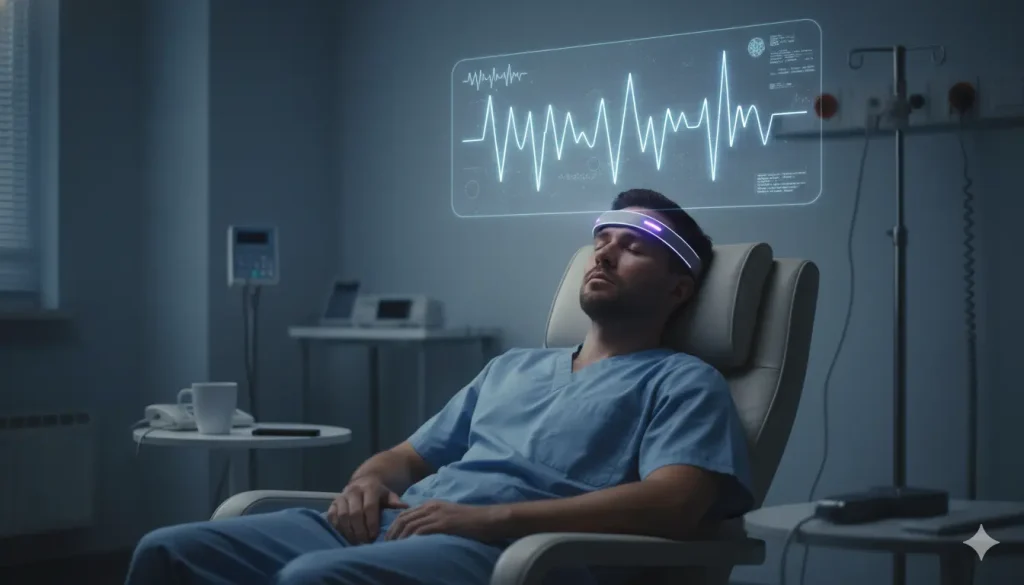
The Shift-Work Struggle
Every doctor knows the feeling: you have 40 minutes to sleep in the on-call room, but your brain is still racing from the last code blue. Chemical sleep aids leave you groggy, and meditation apps often fail when cortisol is high. The NeuroRest Headband claims to use “Sonic Neuromodulation” to manually downshift your brainwaves.
How It Works
The device sits on the temples and uses bone conduction to transmit low-frequency audio pulses. These pulses are designed to mimic the brain’s natural frequency during Delta sleep (0.5–4 Hz). It’s technically “entrainment”—encouraging the brain to sync up with the external rhythm.
The “On-Call” Test
We gave the NeuroRest to three ER residents for a week. The results were mixed but promising.
- Subject A:Â Fell asleep in 12 minutes (usual time: 45 mins).
- Subject B:Â Found the vibration distracting at first but eventually slept.
- Subject C:Â No effect on sleep onset, but reported feeling “calmer.”
The Killer Feature: Smart Wake
The biggest risk of napping on a shift is “sleep inertia”—waking up feeling drunk. The NeuroRest app allows you to set a hard limit (e.g., 25 minutes). Five minutes before the alarm, it shifts frequencies to Beta waves (alertness), gently pulling you out of deep sleep before the loud alarm rings. This feature alone makes it worth the price for medical staff.
Verdict
It’s not magic, and it won’t fix chronic sleep deprivation. But as a tool for “tactical napping” in the hospital, the NeuroRest is a valuable addition to your gear bag.t replacing the arterial line in the ICU yet, but for home monitoring, it is the new king.ls looking to retain aging nursing staff and reduce injury claims, this robot isn’t just a gadget—it’s a necessary infrastructure upgrade.