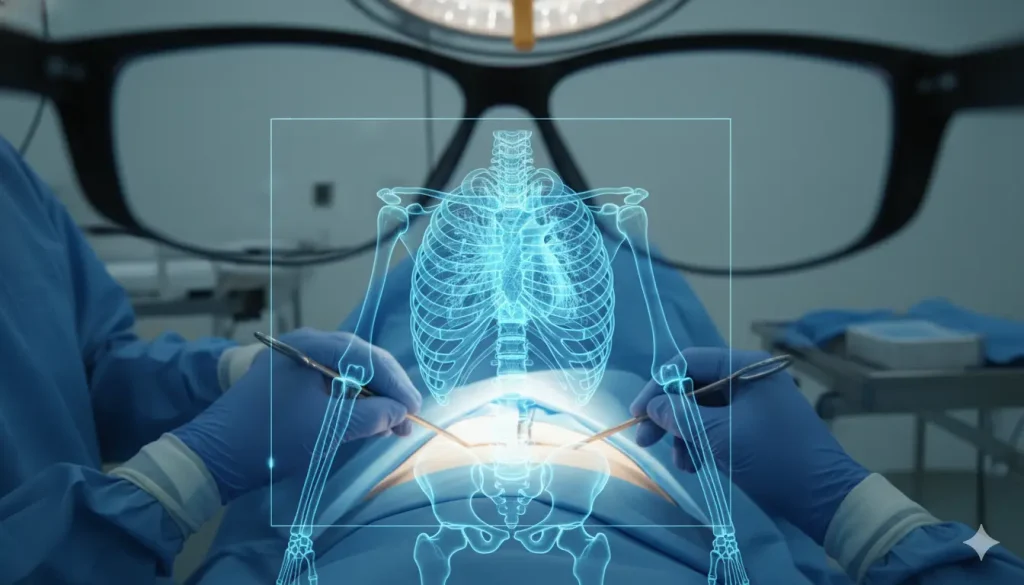
The Heads-Up Display for Surgeons
Fighter pilots have had Heads-Up Displays (HUDs) for decades. Surgeons, however, still have to look away from the patient to check MRI screens on the wall. This “head turning” breaks focus. The VisiMed AR Glasses aim to unify the data and the patient.
Registration: The Holy Grail
The hardest part of surgical AR is “registration”—locking the digital 3D model to the physical patient. If the patient breathes or moves, the hologram must move with them.
VisiMed uses fiducial markers (stickers placed on the patient) to anchor the image. In our dry-lab test using a phantom skull, the alignment was terrifyingly accurate. We could drill a pilot hole based solely on the holographic guide, and it lined up perfectly with the target.
Latency and Lag
In 2025, lag is unacceptable. VisiMed processes data locally on the headset to minimize delay. The latency is under 10ms, which feels instantaneous to the human eye. You don’t feel “seasick,” which was a major issue with older VR headsets.
Ergonomics
Here is the downside: Weight. The glasses pack a lot of computing power, battery, and projectors. After 90 minutes of wear, our test surgeon noted significant pressure on the bridge of the nose. For a 12-hour spinal reconstruction, this form factor is not there yet.
Verdict
For short, high-precision procedures like biopsies or craniotomies, VisiMed is a game-changer. It improves spatial awareness and confidence. But until they shave off another 50 grams of weight, it won’t be used for marathon surgeries.s essential infrastructure. It solves the communication bottleneck without forcing users to carry a second pager. It turns the smartphone into a compliant medical tool.