Introduction
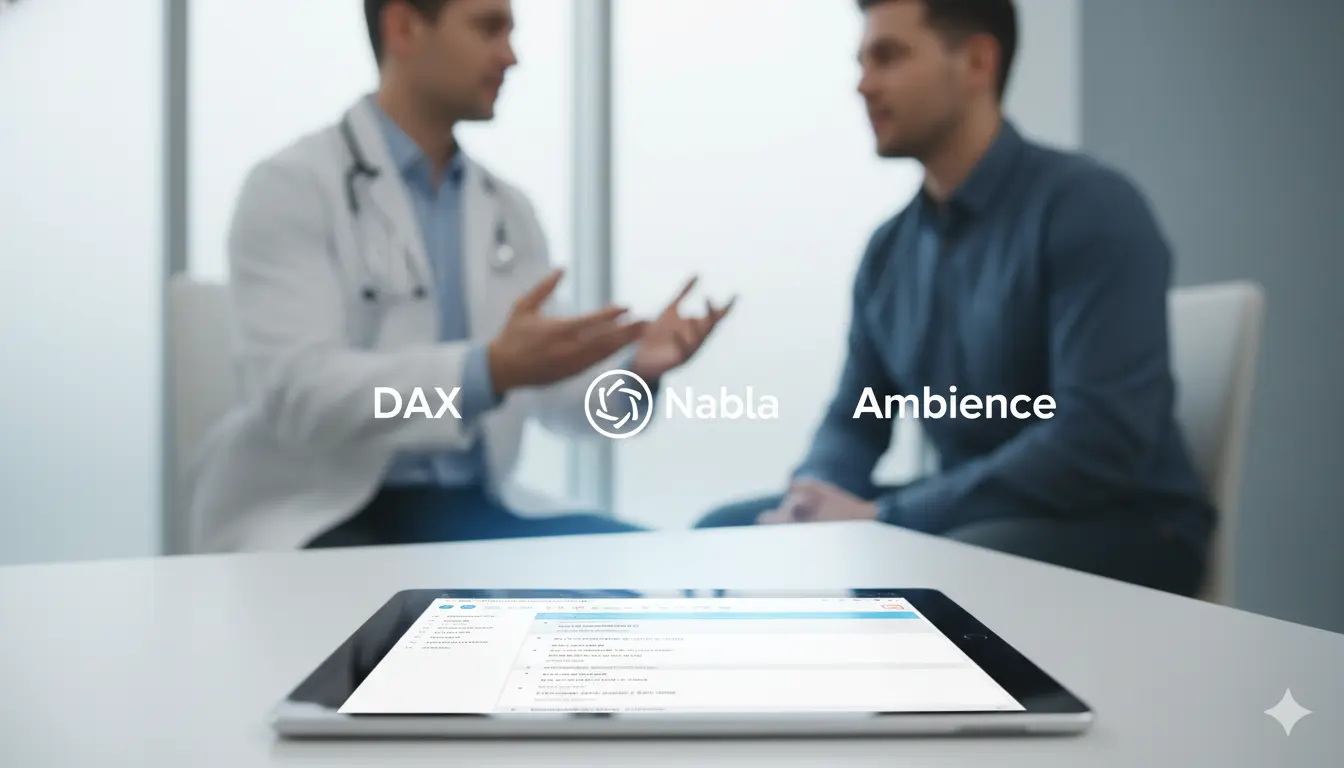
The era of the doctor typing while talking to the patient is ending. “Ambient Clinical Intelligence” (ACI) listens to the patient encounter via a smartphone or microphone and automatically generates a structured SOAP note.
But not all AIs are created equal. In 2025, three major players dominate the market. We broke down the pros and cons for clinicians deciding which tool to adopt.
1. DAX Copilot (Nuance/Microsoft)
- The Heavyweight:Â Fully integrated into Epic and Cerner.
- Best For:Â Large hospital systems and specialists.
- The Pro:Â It is incredibly accurate with complex data. If you dictate a physical exam rapidly, DAX captures it perfectly.
- The Con:Â It can be expensive and sometimes “over-documents,” creating notes that are too long (note bloat).
2. Nabla
- The Speedster:Â A lighter, browser-based or app-based tool.
- Best For:Â Primary Care Physicians (PCPs) and independent practices.
- The Pro:Â It is fast. The note is ready the second the patient walks out the door. It is also excellent at generating patient instructions and summaries in simple language.
- The Con:Â Limited deep integration with older, legacy EHR systems. You often have to copy-paste the note.
3. Ambience Healthcare
- The Specialist:Â Known for its “Auto-Scribe” that adapts to specialties.
- Best For:Â Psychiatry, Oncology, and Cardiology.
- The Pro: Ambience understands context better than the others. In a psychiatry session, it captures the nuance of the patient’s affect, not just their words. It structures notes specifically for billing codes relevant to that specialty.
- The Con:Â Higher learning curve to customize the templates.
The Verdict
If you are a hospital administrator looking for a system-wide rollout, DAX remains the safest, most compliant bet due to Microsoft’s backing. However, for individual doctors or small clinics looking to immediately reclaim 2 hours of their day, Nabla offers the fastest setup time.
The Bottom Line: AI scribes have moved from “novelty” to “necessity.” In 2025, not using an AI scribe is a choice to work harder, not smarter.tals must ensure their PACS (Picture Archiving and Communication System) is cloud-compatible to handle the processing load of these heavy DL models.