SEOUL — The race to measure blood sugar without drawing blood has been the “moonshot” of the wearable tech industry for a decade. Today, Samsung claimed victory.
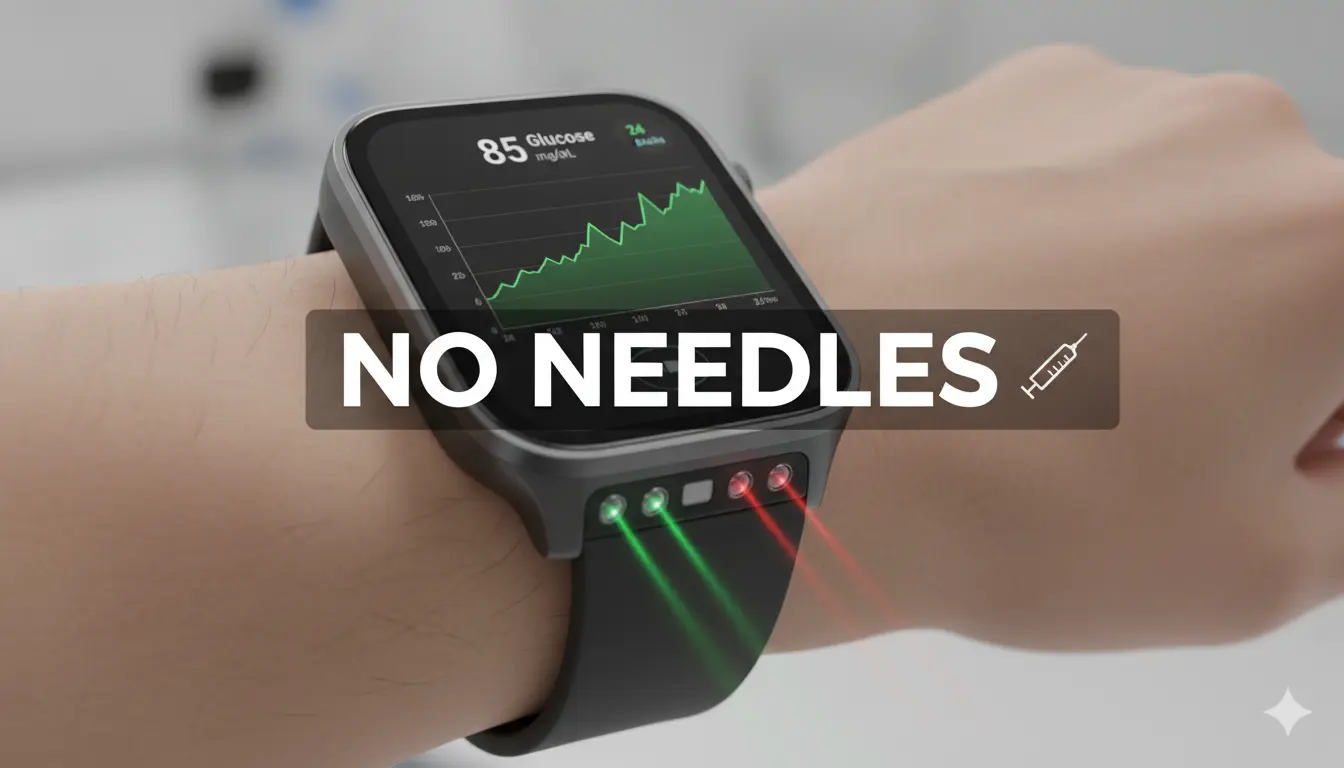
In a press event on Tuesday, the company unveiled the Galaxy Watch 8, featuring a new “Bio-Active Spectrometer” that they claim can track blood glucose levels non-invasively. Crucially, Samsung announced they have received “FDA Clearance for Wellness Use”—a specific designation that allows them to market the feature to non-insulin-dependent users (such as those with pre-diabetes or Type 2 diabetes managed by diet).
How It Works: Raman Spectroscopy
Unlike Continuous Glucose Monitors (CGMs) like Dexcom or Libre, which use a tiny needle filament under the skin, the new Watch 8 uses light.
The sensor shoots a specific wavelength of laser light into the interstitial fluid of the wrist. The light scatters differently depending on the concentration of glucose molecules. AI algorithms then decode this scattering pattern into a blood sugar number.
The Accuracy Question
“Is it as accurate as a finger prick? No,” admitted Samsung’s Head of Digital Health, Dr. June Kim. “But it is 90% accurate in showing trends. It tells you if your sugar is spiking after that pasta dinner or dropping after a run. That is the actionable data pre-diabetics need.”
Impact on the Market
This announcement sent shockwaves through the medical device industry. Traditional CGM manufacturers saw stock dips, while Apple is rumored to be scrambling to accelerate its own project (codenamed E5) for the Apple Watch Series 11 next year.
What This Means for Users
For the 90 million Americans with pre-diabetes, this is a game changer. Currently, insurance rarely covers CGMs for this group. A consumer watch that provides 24/7 glucose insights could revolutionize preventative medicine, allowing users to “gamify” their metabolism and prevent the progression to full diabetes.
The Galaxy Watch 8 hits shelves in January 2026.